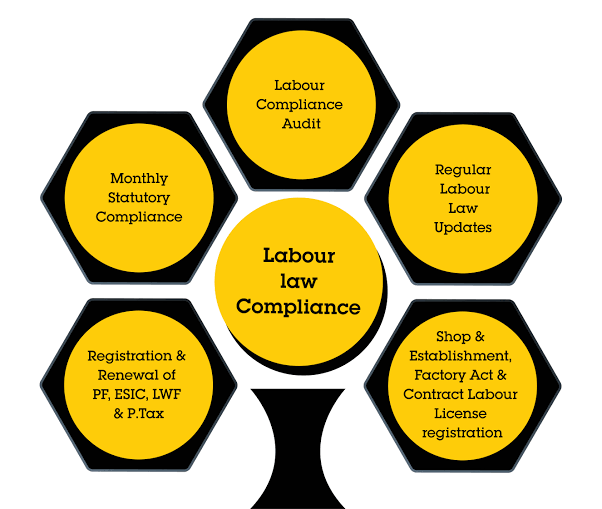
Labour Law Compliance: What Organisations Should Know
Labour Law Compliance is a critical responsibility for every organisation. It ensures that workplace practices are aligned with applicable statutory requirements while protecting the rights of employees and reducing legal and operational risks for employers.
With changing regulations and increasing regulatory scrutiny, organisations need a structured approach to compliance rather than treating it as a routine administrative task. Effective compliance requires awareness, proper documentation, regular monitoring, and timely corrective action.
Why Labour Law Compliance Matters
Strong labour law compliance helps organisations:
-
Reduce the risk of penalties, notices, and legal proceedings.
-
Protect employee rights and statutory benefits.
-
Maintain proper employment and wage-related records.
-
Improve transparency in workplace practices.
-
Minimise the possibility of labour disputes.
-
Build trust between employees and management.
-
Strengthen overall HR and workplace governance.
Key Areas of Labour Law Compliance
Organisations should regularly review important compliance areas such as:
1. Employee Records & Documentation
Maintain accurate and updated employee records, appointment documentation, attendance details, wage records, leave records, and other statutory documents as applicable.
2. Wages & Salary Compliance
Ensure that wages, salary structures, deductions, overtime payments, and other applicable benefits are managed according to the relevant statutory requirements.
3. Working Hours & Leave
Organisations should establish appropriate systems for monitoring working hours, weekly offs, holidays, overtime, and leave entitlements in accordance with applicable laws.
4. Social Security Compliance
Where applicable, organisations must ensure timely compliance relating to statutory social security contributions and employee benefits.
5. Workplace Safety & Welfare
Employers should maintain appropriate workplace safety, health, welfare, and employee-support measures based on the nature of their operations and applicable legal requirements.
6. Statutory Registers & Returns
Required registers, records, notices, and statutory returns should be maintained and submitted within prescribed timelines wherever applicable.
7. Employment Policies & Procedures
Clear HR policies and procedures can help ensure consistency in areas such as attendance, leave, disciplinary action, grievance handling, workplace conduct, and employee responsibilities.
Common Compliance Challenges
Organisations often face compliance gaps because of:
-
Frequent changes in labour regulations.
-
Incomplete or outdated employee records.
-
Missed statutory deadlines.
-
Lack of regular compliance audits.
-
Inconsistent HR practices across departments or locations.
-
Limited awareness among managers and HR teams.
-
Poor coordination between HR, payroll, finance, and management.
How Organisations Can Strengthen Compliance
A proactive compliance approach can include:
-
Conducting periodic labour law compliance audits.
-
Maintaining an updated compliance calendar.
-
Reviewing statutory records and documentation regularly.
-
Assigning clear responsibility for compliance activities.
-
Training HR and management teams on applicable requirements.
-
Identifying compliance gaps and taking corrective action promptly.
-
Keeping proper evidence of filings, payments, registers, and approvals.
-
Periodically reviewing policies and workplace practices.
Moving from Reactive to Proactive Compliance
Labour law compliance should not begin only when an organisation receives a notice or faces a dispute. A proactive approach allows organisations to identify potential risks early and address them before they develop into serious legal or operational issues.
Regular compliance reviews, employee documentation, internal audits, management awareness, and structured processes can help create a more reliable compliance framework.
Conclusion
Effective Labour Law Compliance is about more than avoiding penalties. It is about creating a workplace where statutory obligations, employee rights, organisational policies, and business requirements work together.
By adopting a structured and proactive compliance framework, organisations can reduce workplace risks, improve employee relations, strengthen governance, and create a more stable and legally compliant working environment.